 RSS
RSS Twitter
 Facebook
Showing posts with label food. Show all posts
The right fitness program isn’t enough without the proper diet to go along with it.
By combining a nutritious diet and a fun weight loss program, you’re guaranteed to get the results you’re looking for in no time.
To help you get the proper nutrition your body needs, here are some sampler recipes that you can prepare in line with your current fitness program.
You can also visit Beachbody Coach Laura Wood’s Website for other Healthy Recipe ideas, beachbody program and effective weight loss coaching.
High in beta-carotene, potassium, and manganese, this Superfood is very easy to make.
Simply top your salad with hearty and sweet potato and you’re good to go.
Add some pumpkin seeds to give your dish that extra crunch.
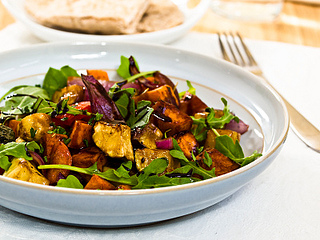
Preperation Time: 15 minutes.
Cooking Time: 30 minutes.
Total Time: 1 hour 15 minutes
Yield: 2 servings
Ingredients:
1 medium baked sweet potato, peeled and cut into ½-inch cubes
½ medium red bell pepper, diced
1 Tbsp. extra-virgin olive oil
1 stalk green onion, finely sliced
1 tsp. fresh lemon juice
½ tsp. raw honey (or pure maple syrup)
1 dash Himalayan salt (or sea salt)
1 tsp. chopped fresh herbs (like basil, oregano or parsley)
(to taste; optional)
1 tsp. fresh lemon juice
2 Tbsp. pumpkin seed kernels, toasted (or chopped
raw walnuts)
1½ tsp. red wine vinegar
1 medium green apple, diced
1½ tsp. red wine vinegar
1 stalk green onion, finely sliced
2 Tbsp. finely chopped fresh cilantro
4 cups fresh arugula
Preparation:
1. Combine the following ingredient in a medium bowl: oil, vinegar, lemon juice, honey, salt, and herbs (if desired). Whisk to blend.
2. Set aside the first mix and combine the following into a large bowl: sweet potato, apple, bell pepper, onion, and cilantro; mix well.
3. Drizzle the dressing over the sweet potato mixture and toss gently to blend.
4. Place even amounts of arugula on two serving plates. Top each with sweet potato mixture and sprinkle with pumpkin seeds.
Healthy Tip:
Be sure to bake the fork-pierced sweet potato at 450° F for 30 to 40 minutes or until just tender. Do not over bake. Set the dish aside to cool after baking before serving.

Nutritional Information (per serving):
Protein: 5 g
Saturated Fat: 2 g
Calories: 236
Fat: 11 g
Carbohydrate: 32 g
Fiber: 6 g
Sodium: 194 mg
Sugar: 16 g
Cholesterol: 0 mg
By combining a nutritious diet and a fun weight loss program, you’re guaranteed to get the results you’re looking for in no time.
To help you get the proper nutrition your body needs, here are some sampler recipes that you can prepare in line with your current fitness program.
You can also visit Beachbody Coach Laura Wood’s Website for other Healthy Recipe ideas, beachbody program and effective weight loss coaching.
High in beta-carotene, potassium, and manganese, this Superfood is very easy to make.
Simply top your salad with hearty and sweet potato and you’re good to go.
Add some pumpkin seeds to give your dish that extra crunch.
Preperation Time: 15 minutes.
Cooking Time: 30 minutes.
Total Time: 1 hour 15 minutes
Yield: 2 servings
Ingredients:
1 medium baked sweet potato, peeled and cut into ½-inch cubes
½ medium red bell pepper, diced
1 Tbsp. extra-virgin olive oil
1 stalk green onion, finely sliced
1 tsp. fresh lemon juice
½ tsp. raw honey (or pure maple syrup)
1 dash Himalayan salt (or sea salt)
1 tsp. chopped fresh herbs (like basil, oregano or parsley)
(to taste; optional)
1 tsp. fresh lemon juice
2 Tbsp. pumpkin seed kernels, toasted (or chopped
raw walnuts)
1½ tsp. red wine vinegar
1 medium green apple, diced
1½ tsp. red wine vinegar
1 stalk green onion, finely sliced
2 Tbsp. finely chopped fresh cilantro
4 cups fresh arugula
Preparation:
1. Combine the following ingredient in a medium bowl: oil, vinegar, lemon juice, honey, salt, and herbs (if desired). Whisk to blend.
2. Set aside the first mix and combine the following into a large bowl: sweet potato, apple, bell pepper, onion, and cilantro; mix well.
3. Drizzle the dressing over the sweet potato mixture and toss gently to blend.
4. Place even amounts of arugula on two serving plates. Top each with sweet potato mixture and sprinkle with pumpkin seeds.
Healthy Tip:
Be sure to bake the fork-pierced sweet potato at 450° F for 30 to 40 minutes or until just tender. Do not over bake. Set the dish aside to cool after baking before serving.
Nutritional Information (per serving):
Protein: 5 g
Saturated Fat: 2 g
Calories: 236
Fat: 11 g
Carbohydrate: 32 g
Fiber: 6 g
Sodium: 194 mg
Sugar: 16 g
Cholesterol: 0 mg

Since the beginning, people (most especially men) all across the world have been searching for a miracle food that will help raise their sexual desire or that of their partners. Some believe that oysters are effective in increasing libido, while others tend to put their faith in exotic foods, such as the balls of an Asian tiger or a bark of a tree that can only be found in the Amazon. Although many attest to the effectiveness of such aphrodisiacs, studies and research that back these suppositions are still lacking.
Below are some foods that can be seen around the kitchen that is believed to be an effective aphrodisiac.
Dark Chocolate
Anyone who feels anxious and stressed is usually not in the mood for some sex. Take out stress, be relaxed and happy and you will be more open to doing the deed with your partner all night long. One of the reasons why dark chocolate is on top of the list of foods that help spark an active sex life is that it enhances the production of endorphins, a hormone that makes individuals feel good, relaxed and happy. Just eat a couple of dark chocolate squares after dinner and wait for your mood to change from catty to naughty.
Honey
A couple of teaspoonful of honey a day can actually do wonders for your sexual relationship with your partner. Since this naturally produced sweetener is a simple carbohydrate, it is a main source of instant energy. Furthermore, pure and unadulterated honey contains boron and B vitamins which are needed by the body in order to use female sex hormone estrogen (Boron). Vitamin B on the other hand is vital in the production of male sex hormone testosterone.
Celery
This is not only a must for dieters, but also the missing ingredient in reviving sexual attraction between long time couples. Raw celery is a good source of androsterone, a male hormone that helps mimic the effect of pheromone that makes a man more attractive and irresistible to women. Women can also benefit from eating celery because it helps elevate their mood.
Banana
Stamina or endurance in the bedroom maybe a big issue once you hit the 40ish to 50ish age bracket, copulation that used to last for several hours is replaced with a short and often unsatisfying sexual encounter. Banana helps the production of testosterone that will improve endurance for some foreplay and the main act itself. Eating banana a few hours before trying to get it on with your partner is advisable.
Ginger
Many think that this pungent root is an unlikely candidate for an aphrodisiac. However, ginger is actually valuable in promoting good blood flow, particularly in the genital area. If you don't like to eat ginger before the love making because of fear of bad breath, you can actually just sniff fresh ginger to increase blood flow to your vaginal or penile area and increase that organ's sensitivity.

What is Bloating?
Bloating is when intestinal gas doesn't get passed out by belching or flatulence (passing gas). It's a very uncomfortable feeling but can and sometimes can be relieved by having a bowel movement or passing gas. There are steps to take in order to prevent bloating which are avoiding smoking, avoiding or cutting down fatty foods intake and certain foods such as beans and cabbage.
Common Causes of Bloating (not in any particular order)
· Greasy, fried and fatty foods
Majority of fast foods entrées like burgers, chips, fried chicken and deep-fried such as doughnuts. These foods cause bloating because it takes the stomach much longer to break down the fats and properly digest them. This extra time allows gas to build up thus causing bloating.
· Salty foods
High-sodium foods cause the body to retain water, which leads to a bloated feeling. Sodium can show up in some unlikely sources, especially in processed foods.
· Spicy foods
Spicy foods have been shown to stimulate the release of stomach acid, which causes stomach irritation. Limiting the use of black pepper, nutmeg, cloves, chilli powder, curry, onions, garlic, mustard, BBQ sauce, horseradish, tomato sauce and vinegar will help in avoiding bloating.
· Gassy vegetables
Some vegetables produce more gas than others and everyone is different with their ability to absorb and tolerate gas. If sensitive, limiting the intake of gas-producing vegetables such as baked beans, broccoli, Brussels sprouts, cabbage, cauliflower, lentils, Lima beans, onions and peppers will be helpful.
· Carbonated and high-acid drinks
From sodas to fizzy mineral water will cause bloating because the carbon dioxide trapped in the bubbles creates gas in the stomach. Others like alcohol, caffeinated drinks, coffee, tea, hot chocolate and some fruit juices are high in acid which can irritate your GI tract, resulting in swelling and bloating.
· Artificial sweeteners
Artificial sweeteners such as aspartame, saccharin, sorbitol, xylitol, maltitol, cyclamates and sucralose increases bloating, these are often found in diet drinks, sweets, cookies, energy bars and chewing gums. It lingers in the stomach because artificial sweeteners are indigestible and after build-up it acts as a platform for the fermentation of bacteria leading to production of gas.
· Dairy products
Lactose-intolerance is relatively common, especially among people of Asian, African and Southern European descent and it causes bloating. The lactose that is not completely digested will pass to the colon where gas is produced by the bacteria trying to break it down. Consulting a dietician to ensure adequate consumption of other calcium-rich foods is very advisable.
· Too much fruit
Like lactose-intolerant, fructose-intolerant is basically the indigestion of sugar. It is noticeable when someone has an excess gas after eating fruit. Choosing a lower-fructose fruits, like sweet melon and apricots, instead of high-fructose fruits like apples and bananas is advisable. It is also best to eat fruit separately from a meal - either 30 minutes before or at least two hours after.
· Starches
Most starches, including potatoes, corn, pasta and wheat produces gas as they are broken down in the large intestine. Rice can be a good substitute for Starches. Also, beware of refined grains like white flour that's often used in white bread, cake and biscuits. Not only do they offer little nutrition, they can also cause water retention, bloating will be the result.
· Chewing gum
Chewing gum makes someone to swallow air which then gets trapped in the belly, causing pressure, bloating and gas. It also has artificial sweeteners which can aggravate bloating.
· Apples and pears
These fruits contain fiber which is an excellent source of soluble fiber, but they can also upset someone with a sensitive tummy. Avoiding them is not recommendable, eating half or a quarter of these fruits or peeling them first is highly recommended to avoid bloating.
· Beans
Beans contain oligosaccharide, a type of sugar which is not normally digestible by our bodies. When it reaches the large intestine, the bacteria eat it up and the byproduct is gas. Consuming small amounts of beans along with easily digestible whole grains such as rice or Quinoa will be very helpful.
· Broccoli, cabbage, and asparagus
These highly nutritious veggies are often avoided because of the odoriferous outcome. The reason these veggies cause gas is due to raffinose. This foods produces a sugar named raffinose, it goes undigested until it reaches the large intestine, where it's fermented by methane-producing bacteria. Eating them in moderation and with other foods should help to prevent a bloated stomach.
· Breads, grains, cereals, and nuts
Wheat and wheat-products can cause some people to have gas build-up. Minimizing consumption of wheat items like Bagels, Breakfast cereals, Whole grain breads, Whole wheat flour and Pastries is highly recommended.
· Acidic Foods
Acidic foods such as tomato and tomato products, white/red vinegar and citrus fruits such as apples, cherries, grapes, pomelos, orange, lemon, lime, and pineapple which are extremely acidic causes the stomach to react by building gas.
How to avoid Bloating?
Aside from following the simple steps in avoiding bloating, below are additional steps in avoiding it.
- · Eating slowly and consuming smaller frequent meals
- · Chewing foods properly
- · Drinking of beverages at room temperature
- · Denture checkup to see if it is a good fit
- · Increasing physical activity during the day
- · Sitting up straight after eating
- · Taking a short stroll or walk after eating

Are you considering shifting to a vegetarian diet?
Maybe now you see the health benefits of making the transition to vegan diet or you simply want to discover if you can make the big leap to a plant-based diet. But whatever your reasons are, it’s good enough that you have come to terms in trying a healthy option.
A vegetarian is a person who avoids eating meat, poultry, fish and shellfish and their by-products. Instead, he restricts his food preferences to grains, nuts, seeds, vegetables and fruits with or without the dairy products or eggs.
According to the Vegetarian Society, there are three kinds of vegetarians, they are:
- Vegans. They are those who don’t eat eggs and dairy products or any other by-products of animals and only stick to their vegetable diet.
- Lacto vegetarians. They eat dairy products, except eggs along with their vegetable diet.
- Lacto-ovo-vegetarians. They are those who also eat eggs and dairy products aside from their vegetable diets. Most vegetarians are under this category.
The transition from being a non-vegetarian to being a full-pledge vegetarian is undoubtedly not an easy task to accomplish. It requires sheer determination and discipline to be one.
The transition period doesn’t have to be swift or abrupt. In fact, it should be gradual to allow your mind and body to take in the changes. There would be struggles and challenges along the way and you have to keep that determination if you want to get past the transition period.
Following are some time-tested tips that will guide you and help ensure that you are on the right track:
- Take the matter seriously, make up your mind and stand by your decision of becoming a vegetarian. It’s useless to do something you are not committed to finish and succeed.
- Read and gather information on vegan lifestyles. You should at least know what vegans usually do if they really feel so hungry. With this, you can gauge yourself if you have the patience, determination and commitment to fit in their system.
- Check out their recipes. Choose those that leave great impact to you and be sure to start trying some of them.
- Make a mental note of what vegan recipes can work for you. Eventually, you can do your own tweaks in those recipes according to your taste and preference.
- Start making substitutions. Instead of using meat or poultry in your usual favorite dish, try substituting vegan substitutes for meat.
- Start phasing out red meat in your diet gradually. Everything is about gradual shifting, so find opportunities where you can include vegan ingredients to your usual recipes or meals. You don’t need to forego meat in an instant.
- After the red meat, it’s time try to give up the pork, chicken and sea foods. First, try not to eat pork for two weeks, then after that, try not having chicken for the next two weeks and lastly, leave out sea foods for the last two weeks. Hopefully, after a month, it wouldn’t matter anymore.
- Try dairy and eggs. After being meatless for some time it is suggested that you consider dairy and eggs if it feels right for you. They are rich in saturated fats compared to soy alternates.
- Make a list of your favorite foods that you regularly eat before the shift - breakfast, snacks, lunch, dinner and desserts. Then, make a list of the possible meatless substitutes to the meat ingredients of your favorite foods.
By keeping the guides above, you can feel that you are ready to make the big switch – that of becoming a vegetarian.

If your doctor still haven’t told you the health benefits of taking your Vitamin A’s, then you ought to read this. What do you need Vitamin A for? Well, this is the vitamin you need most for it is also gene transcription, it is also great in terms of skin health and Vit A helps in boosting your immune function and vision.
Vitamin A is an essential vitamin that our body craves for. The deficiency of it can lead to increased viral infection and blindness. On the other hand, excessive consumption of Vitamin A can cause irritability, nausea, vomiting, hair loss, jaundice, and loss of appetite. Vitamin A needs to be consumed with fat for optimal absorption because it is a fat-soluble vitamin.
For your Vitamin A source, make sure you nibble on the following fruits and veggies:
1. Carrots.
If you have Vitamin A deficiency, you can eat or drink carrots which happen to be a reliable source of Vitamin A. If you drink ¾ cup of carrot juice, you get 1,692 mg of Vitamin A and 71 calories. On the other hand, a half cup of cooked carrots will give you 671 mg of Vitamin A and a low 27 calories. Buy organic carrots as much as possible to avoid having to deal with pesticide residue.
2. Sweet Potatoes.
Take a medium sweet potato and you get 1,096 mg of Vitamin A (in beta carotene form) and 103 calories. Remember to eat the skin of your baked sweet potato.
3. Pumpkins.
These are known to be rich in Vitamin A. You get 953 mg of beta-carotene form Vitamin A with half cup of canned pumpkin. 42 calories is all you get from the same half cup of canned pumpkin.
4. Spinach.
In beta carotene form, spinach is nothing close to yellow or orange associated with other beta carotene sources. A half cup of spinach gives you 573 mg of the nutrient and 30 calories. You can have sautéed spinach or you can add it to your fresh green salad.
5. Collards.
Like spinach, this beta carotene source is green – not yellow or orange. A half cup of collards give you 489 mg of Vitamin A, and 31 calories.
6. Beet Greens.
You’ll get 276 mg of the nutrient in beta carotene form and 19 calories from half cup of beet greens. You can use this superfood to replace collards in recipes.
7. Mustard Greens.
Aside from lowering cholesterol level, mustard greens offer 865 mg of Vitamin A and 36 calories in the form of carotenoids from a cup of cooked mustard greens.
8. Kale.
Vitamin A comes in beta carotene form and half cup serving gives you 478 mg of Vitamin A and 20 calories.
9. Mango.
This sweet-tasting and juicy tropical fruit gives you 178 mg of Vitamin A, and 107 calories for a cup of sliced ripe mango.
10. Cantaloupe Melon.
This fruit is low in fat and calories but rich in vitamins and nutrients. Take 1/8 medium size melon to get 598 mg of Vitamin A and 23 calories.
Now you know what to include in your daily diet, and remember to always eat a balance meal.


